More Ferrets Call Logan County Home
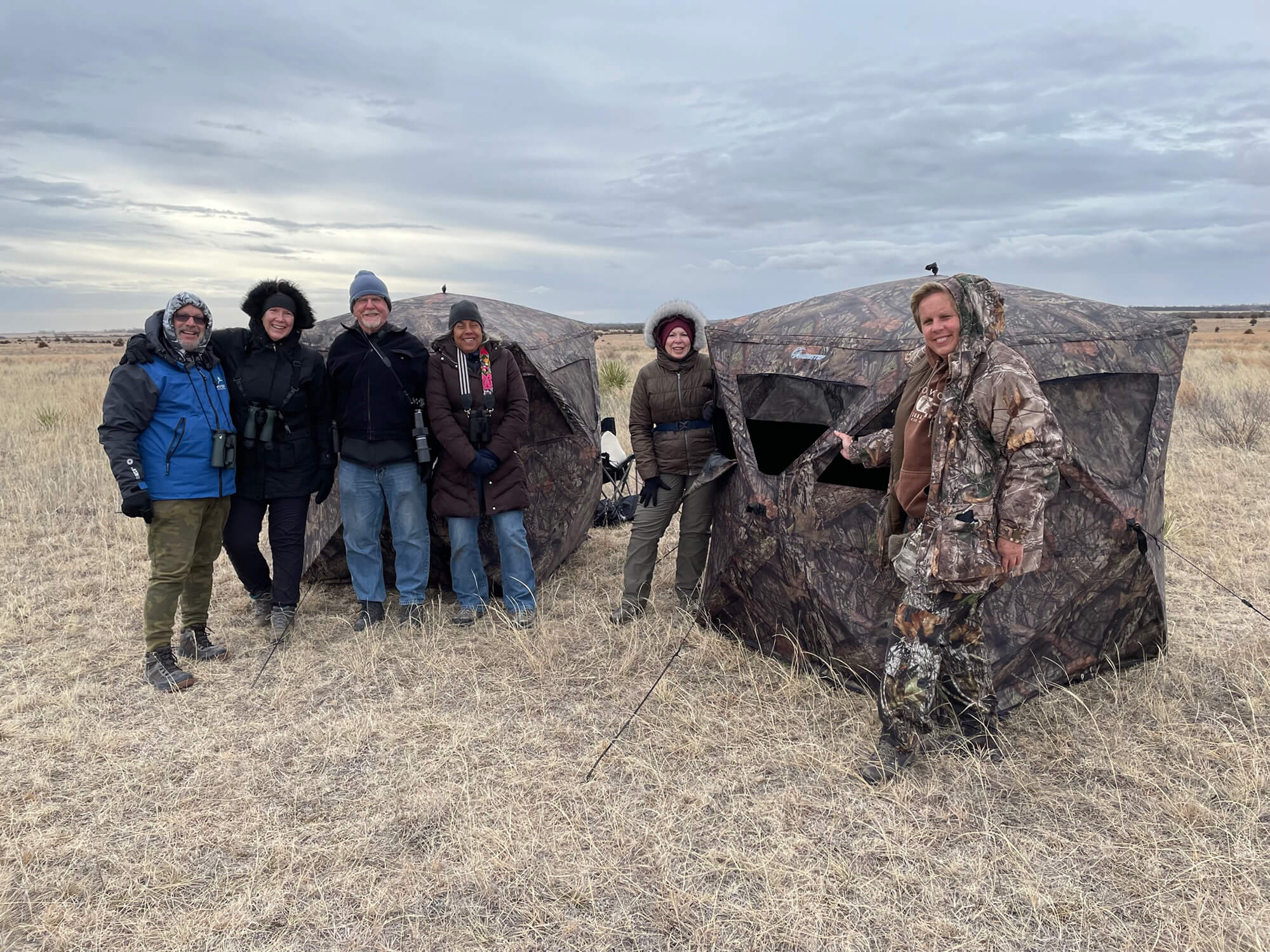
RUSSELL SPRINGS -- Reinforcements arrived in the grasslands of southwest Logan County on Wednesday evening, providing a once-in-a-lifetime show for most of the 20 people on hand. But rather than scurry away, the black-footed ferrets scampered about, providing a display that hasn't been seen in Kansas for decades.
Another 19 ferrets -- the nation's most endangered mammal -- were released at three sites in Logan County Wednesday, where a reintroduction project has been under way since December when the first round of animals was released.
Read the full article...

Ferret ReIntroduction Timeline
Nov 2005 |
Dec 18, 2007 |
Aug 30, 2008 |
Oct 15, 2008 |
USFWS begins evaluation of 5 private ranch lands for prairie dog populations |
Ferrets ReIntroduced
to Kansas
|
Survey shows Successful Reproduction
|
Additional Ferrets Released |
Watch video of ferret survey Photo courtesy of Wichita Eagle
Prairie Dogs and Ferrets - a century-old Kansas law is being used to destroy prairie dog colonies on private land in western Kansas.

Rozol: Prairie Dog Poison and Secondary Effects - Audubon of Kansas is very concerned about the use of Rozol to poison prairie dogs in Kansas and the detrimental effects of secondary poisoning on other wildlife species within prairie ecosystems.
|
Wildflowers Make Kansas Roadsides Spectacular in Mid-September
As the summer travel season transitions to autumn, Audubon of Kansas is reminding Kansas residents to take mid-September opportunities to enjoy the state's spectacular display of prairie wildflowers and native grasses along roadsides and throughout the countryside. Because of abundant rainfall this summer, 2008 is a banner year for a diversity of native sunflowers and similar species that are locally abundant along some of the state highways which have not been mowed. The greatest array of showy fall wildflowers and native grasses are seen in the Flint Hills, Chautauqua Hills, Smoky Hills, Red Hills, and other landscapes with native prairies and woodlands adjacent to rural roads, according to Ron Klataske of Manhattan, Executive Director of Audubon of Kansas.
View an album of images of Kansas Roadside wildflowers.
Read more about our efforts with state roadside mangement policies
http://www.audubonofkansas.org/RoadsideManagement/roadsides.html
Mount Mitchell
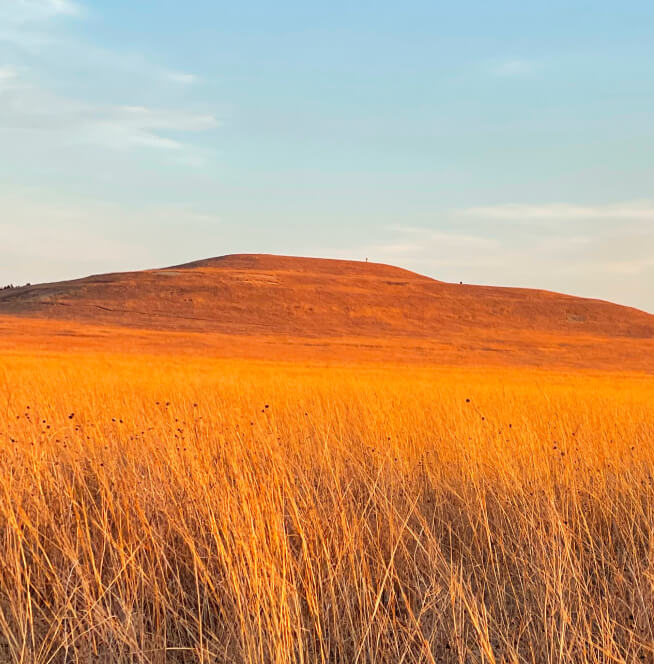
On Thursday, April 27th 2006, Governor Kathleen Sebelius ceremonially signed Senate Bill 553 transferring ownership of a 30-acre hilltop prairie in Wabaunsee County to Audubon of Kansas. April 28th marked the 150th anniversary of the Beecher Bible and Rifle Colony’s arrival at Wabaunsee from New Haven, Connecticut.
AOK and local community members have since been working at the biologically diverse and historically significant Mount Mitchell in Wabaunsee County to provide recreational and educational opportunities to the public.
Mountain Lions Confirmed in Kansas in Recent Years
Wildlife biologist and Executive Director of Audubon of Kansas, Ron Klataske, has documented the occurrence of several mountain lions in Kansas in recent years and confirmed the existence of two separate cougars since April of 2006, and another that was killed in north central Kansas in 2002.
*Audubon of Kansas is a leading source for information on Mountain Lions in Kansas |