To ensure everyone has the best chance to see the prairie-chickens, minimize disturbance to the birds, and comply with regulations related to threatened species under the Endangered Species Act, please follow the guidelines below. Your cooperation helps protect the prairie-chickens and enhances the viewing experience for everyone.
_
Location Privacy and Reporting
If you record your sightings in eBird (and we hope you do!), please do not specify the exact location of the lek. These leks are on private property and not accessible to the public, although some may be visible from public roads. To protect the birds, avoid pinning the exact location in eBird or sharing it on social media. Instead, mark sightings by the county or a nearby landmark.
_
Noise and Light Discipline
- Remain quiet in the blinds. Whisper only if necessary, and avoid unnecessary conversations. Silence all electronic devices and minimize noises from equipment, such as camera clicks or metal clinking.
- Once settled in the blind, do not use flashlights, headlamps, or any light source, as it is highly visible to the birds.
- Turn off any camera flash, especially if using automatic cameras, as the birds appear when it’s still dark. Don’t worry – as the sun rises, you’ll have great photo opportunities.
_
Minimize Visibility and Movement
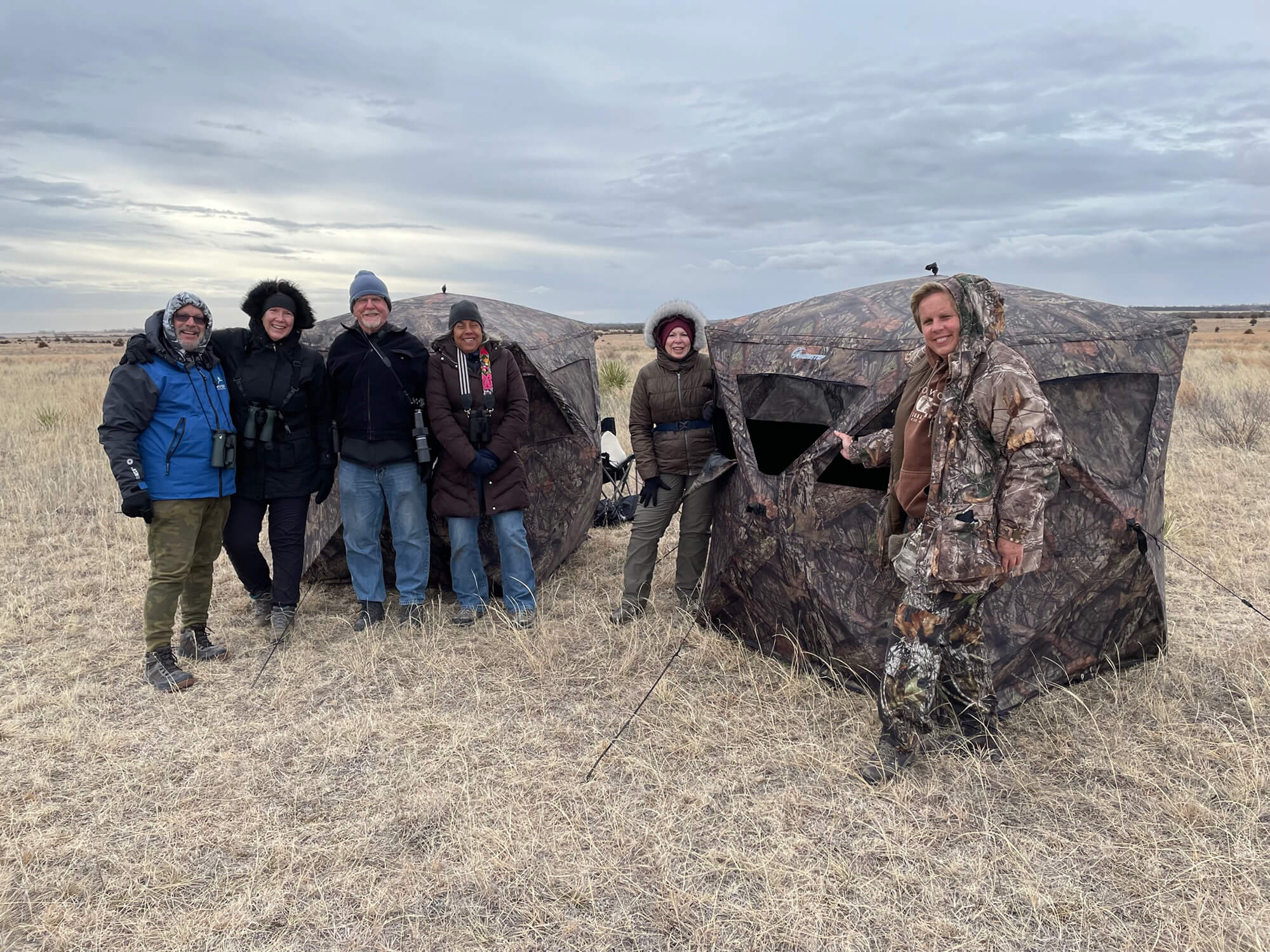
- Wear drab or dark clothing to blend in with the surroundings.
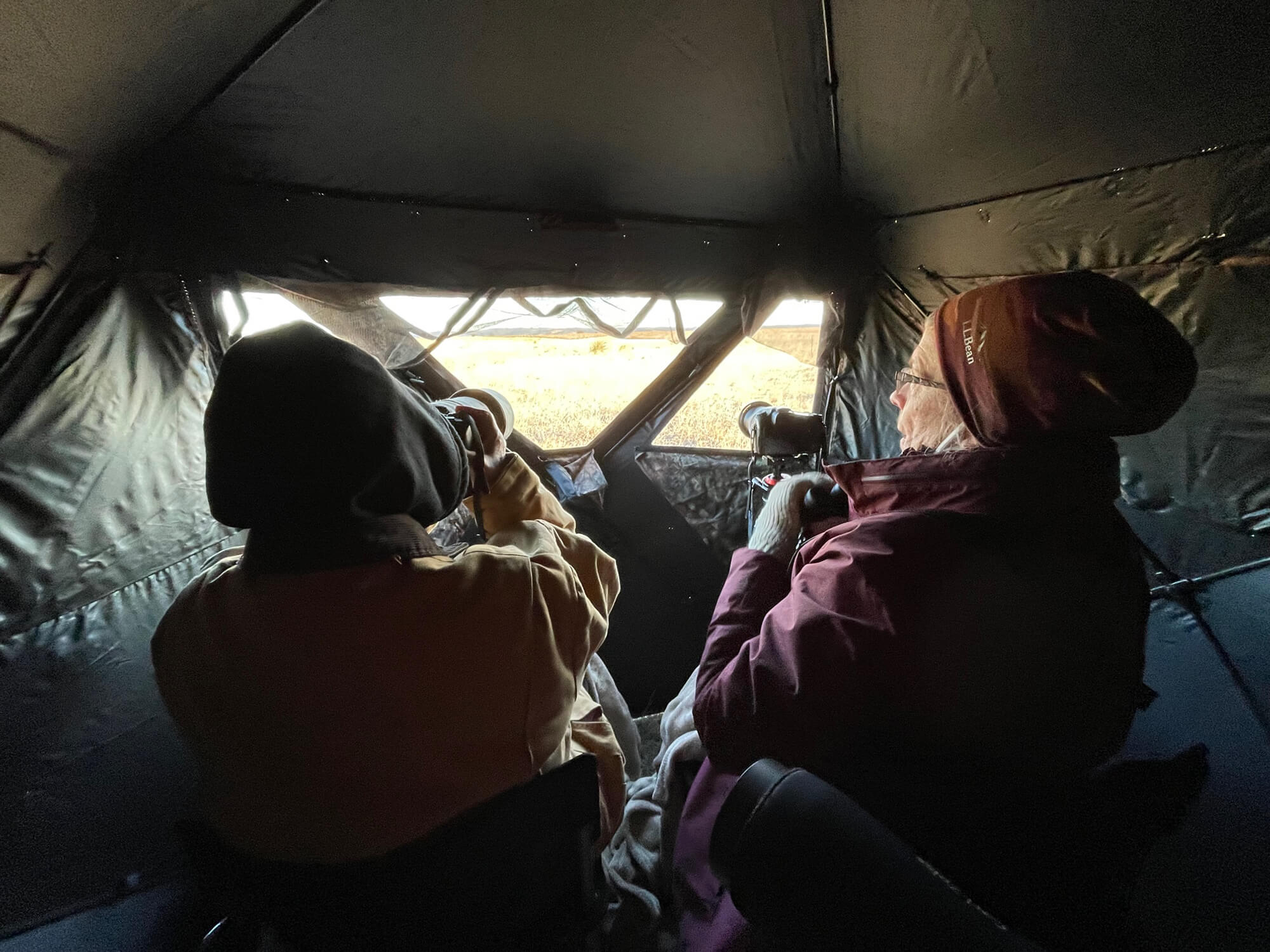
- Only open the viewing window on the side indicated by the leader. Do not open windows on other sides, as this reveals human silhouettes and can scare the birds.
- Keep your hands, head, and camera lenses within the blind at all times.
- Remain as still as possible. If more than two people are in the blind, take turns in the front row to ensure everyone gets a good view.
_
Entering and Exiting Blinds
Do not leave the blind until instructed by the leader. Even if no birds are visible, they might still be nearby but out of view. The leader will let you know when it’s safe to exit.
_
Viewing from the Van or Bus
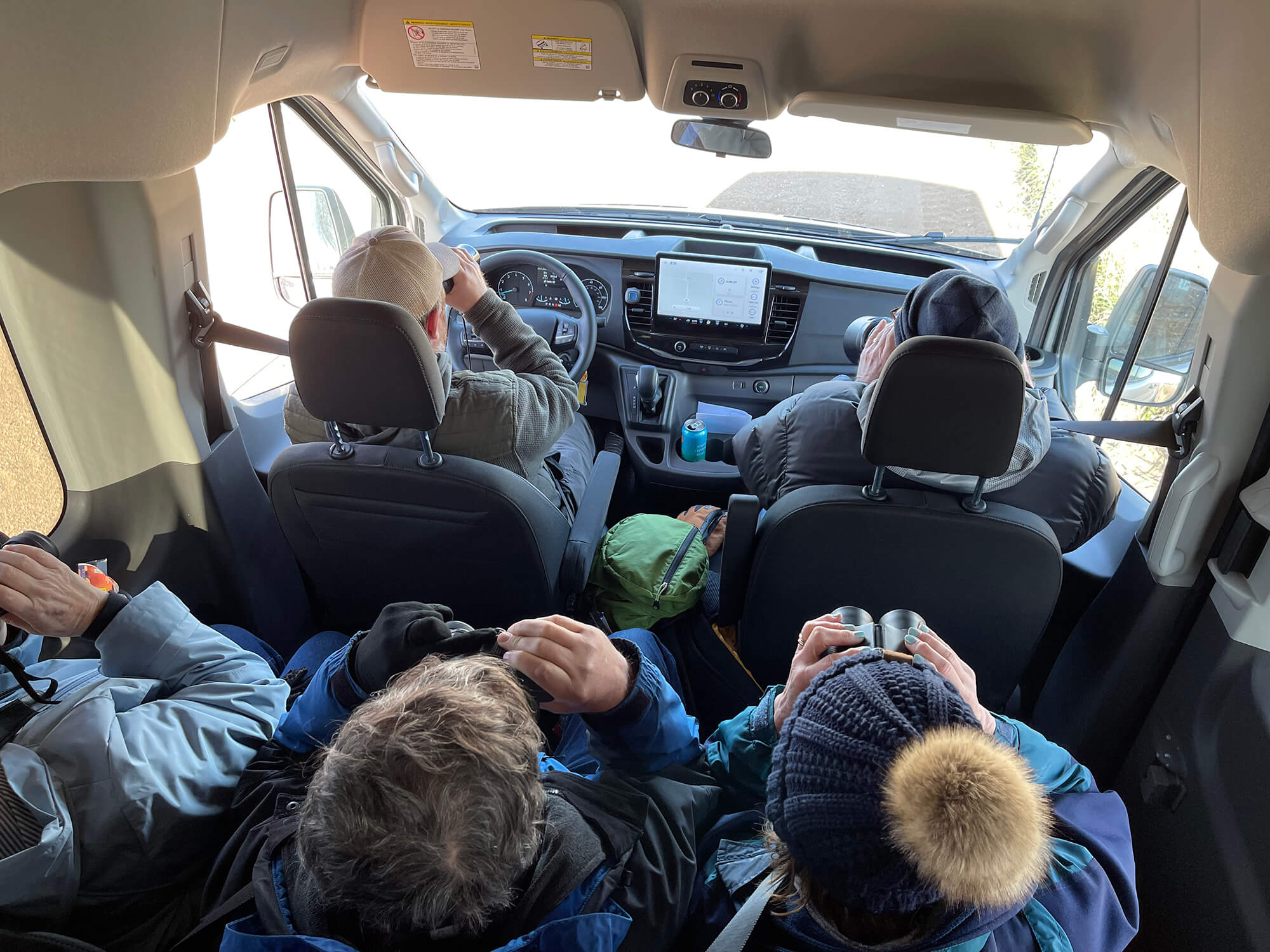
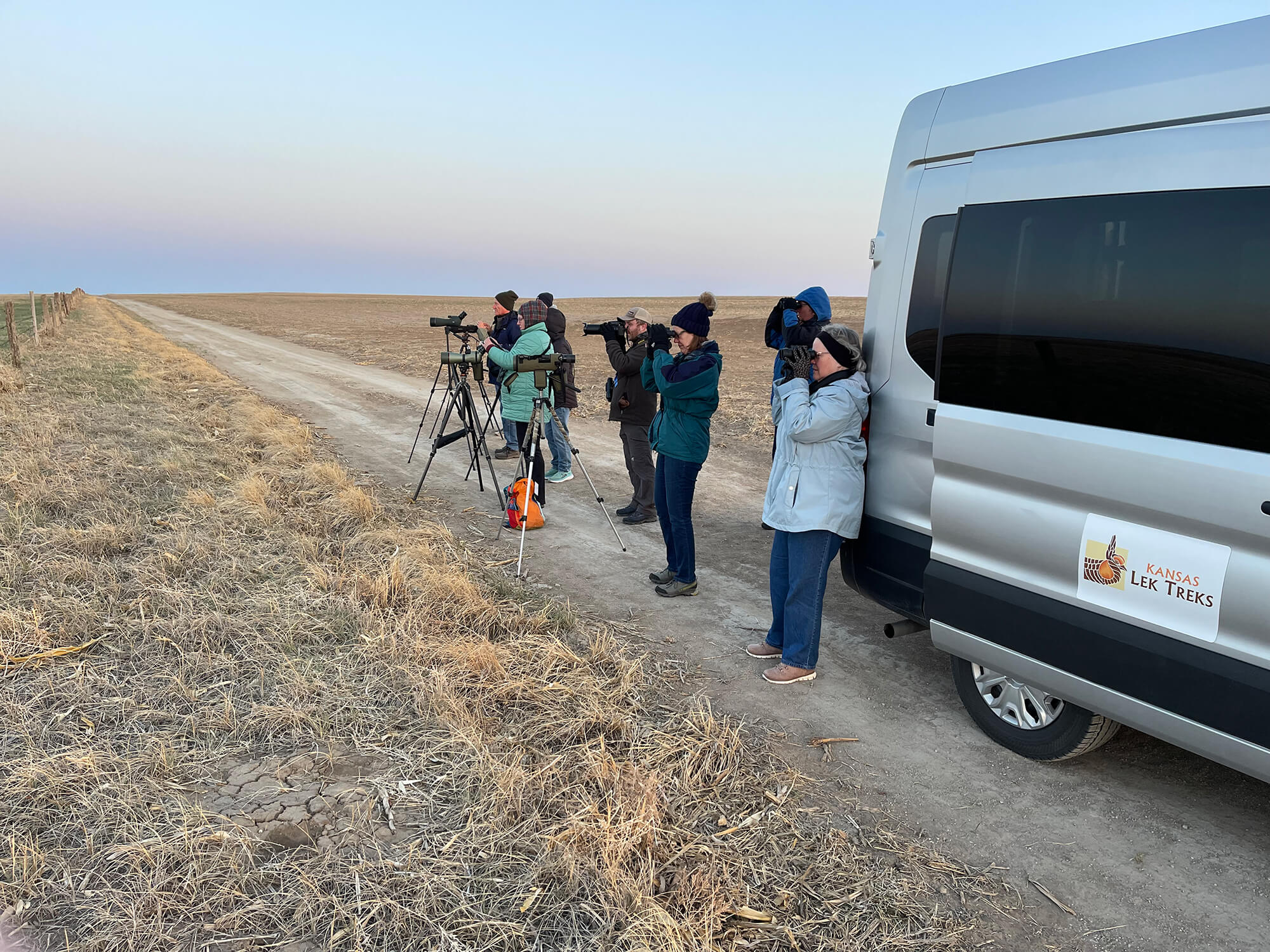
If watching from the van or bus, you may exit to use spotting scopes from a distance. You can bring your own scope or use the scopes and guidance provided by the tour guides.
_
Dress for Cold Weather
Even if daytime temperatures are warm, early morning temperatures on the windy prairie can be below 40°F. Dress in layers, including at least two layers on your legs and upper body, along with hats, scarves, and gloves. Experienced prairie-chicken watchers often wear long underwear under their pants and a snow suit over everything. If you don’t have this gear, consider bringing a blanket. It’s much colder in the blinds than you might expect.
_
Restroom Access
There are no restroom facilities at the blinds or viewing locations. You will be in the blinds or van for about 4 hours without an opportunity to leave. The last chance to use a restroom is when you first arrive, before getting settled in. To stay comfortable, avoid drinking large amounts of liquids beforehand.




.jpg)









.svg)
.svg)
.svg)