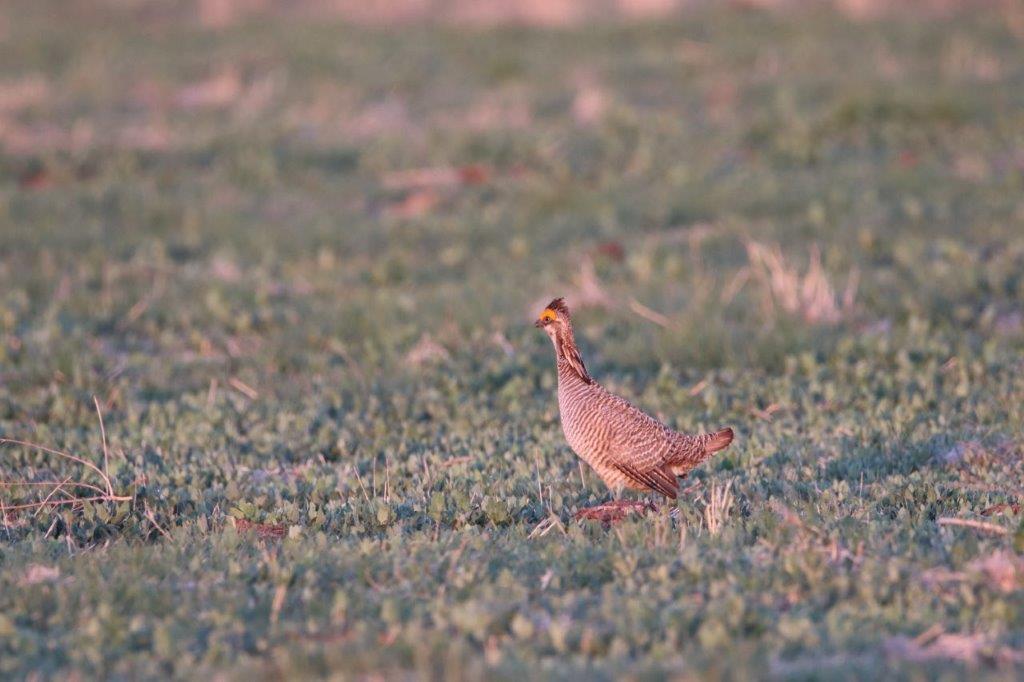
ASHLAND — Staking out the elusive and rapidly disappearing lesser prairie chicken involves a stealthy 5:30 a.m. entry into a rebar-fortified bird blind, freezing into place as the sun rises and the birds begin to strut here and there, popcorning in an age-old mating dance.
Any lesser prairie chicken that has made it into the lek, an area of low grass in which mates are found and won, has already beaten the odds. Beset by politicians’ attempt to strip away federal protections and a dwindling habitat, the bird is battling extinction.
The grouse, known for its colorful spring mating dance, was listed as threatened in Kansas in late 2022 by the U.S. Fish and Wildlife Service. At the time, wildlife officials estimated that 90% of the habitat the birds once inhabited — intact tracts of native grasses — had vanished. With a multistate attempt to overturn this listing underway, the bird’s future has become even more tenuous.
Jackie Augustine, executive director of Audubon of Kansas, put the number of lesser prairie chickens in the U.S. at an estimated 26,591 in 2022, 75% of which were found in Kansas.
“We’ve lost so much of our prairie landscape,” Augustine said. “We’ve lost the bison, we’ve lost the wolves and the other things that used to roam in great herds all over. I feel like if we lose the prairie chicken, we’ve really lost the identity of the prairie. Because the prairie chicken is just so symbolic and charismatic of intact grassland landscapes, that if we lose them, we’ve really lost the connectivity of the landscape. It’s not just losing one species, we’re really losing a part of our heritage.”

.svg)
.svg)
.svg)