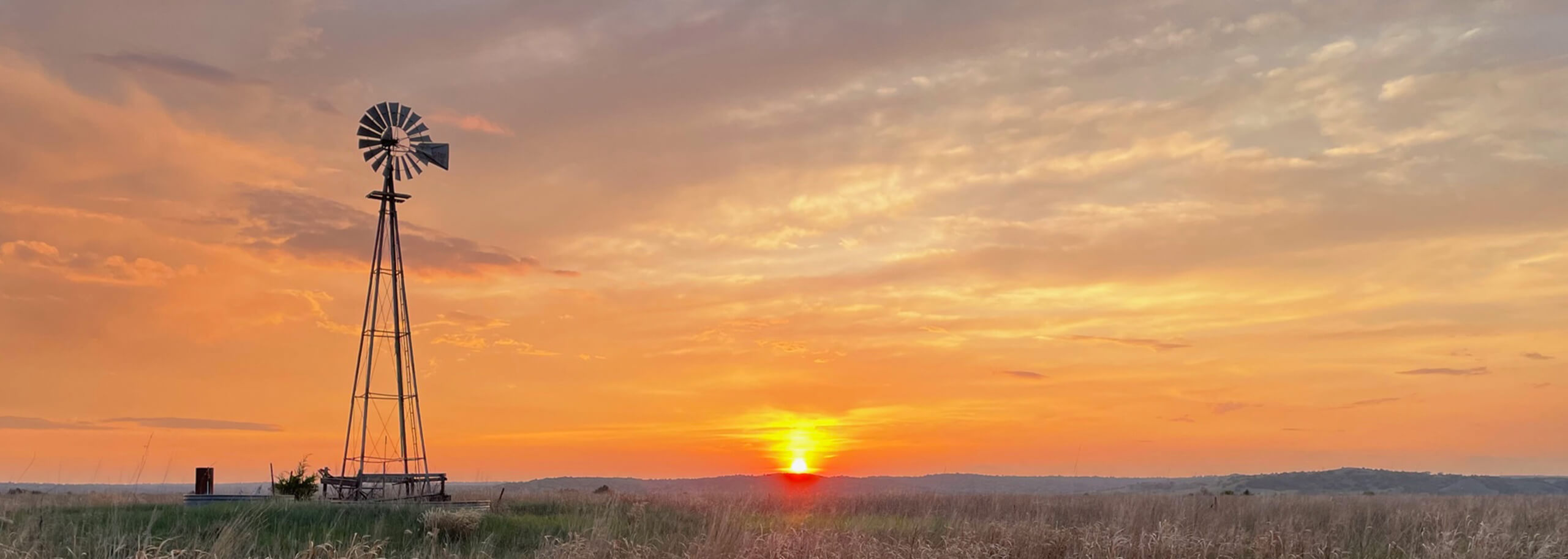
Renewable energy is critically needed to address climate change, but its development must not come at the expense of Kansas’ native prairies and wetlands. Too often, proposed industrial-scale wind and solar projects are sited in sensitive habitats where they threaten wildlife directly and indirectly.
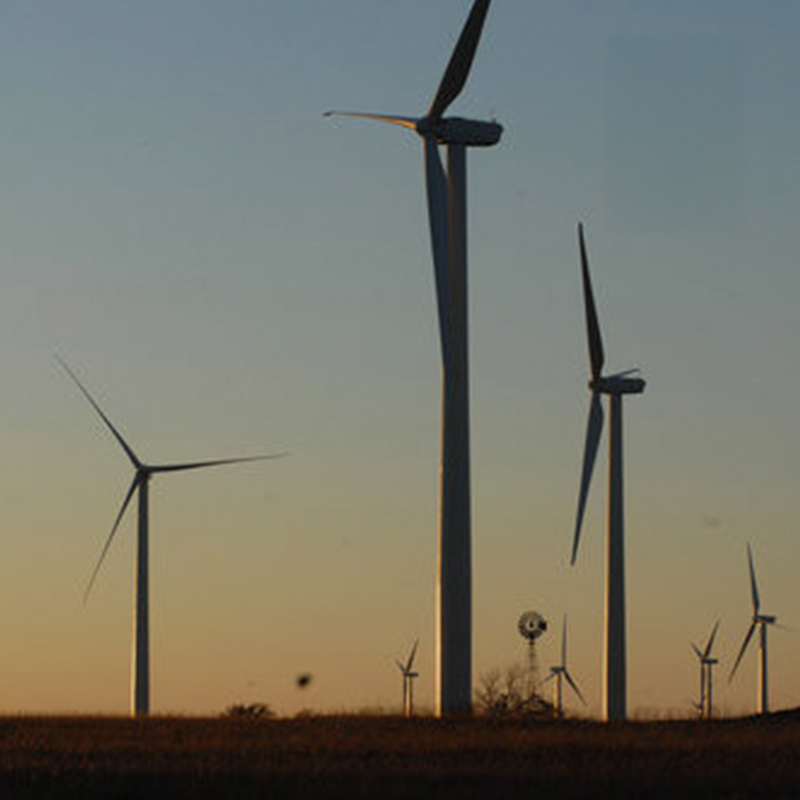
Wind energy poses significant risks: birds and bats are killed by turbine blades, and many grassland species avoid areas with tall structures that provide perches for predators—even when suitable habitat remains below. Solar developments also create hazards. Research shows that panels can resemble water bodies to aquatic insects and birds; insects may lay eggs on the panels, and birds attracted to them sometimes cannot take flight again.
Transmission lines compound these threats by fragmenting habitat and causing deadly collisions. Lesser Prairie-Chickens will not cross high-voltage lines, effectively dividing populations, while juvenile Whooping Cranes face their greatest mortality risk from such collisions.
Audubon of Kansas works to ensure renewable energy is pursued responsibly. We testify at the county level on conditional use permits, advocating for wildlife-friendly siting and mitigation. One recent success was stopping an industrial solar array from being built immediately adjacent to Cheyenne Bottoms Wildlife Area, a wetland of international importance.

.svg)
.svg)
.svg)